

Eye protection is not a one-size-fits-all purchase. The best safety glasses for shop, lab, and field work are the ones that match the hazard, fit correctly, and carry the right ANSI markings.
TL;DR: Summary
-
The best safety glasses for shop, lab, and field work are ANSI/ISEA Z87.1 eyewear matched to the hazard, with Z87+ impact protection and side coverage as the safest default for many shop and field tasks.
-
OSHA and NIOSH both tie eye protection selection to the specific exposure, so flying particles, chemical splash, dust, and non-ionizing radiation should not be treated as the same risk.
-
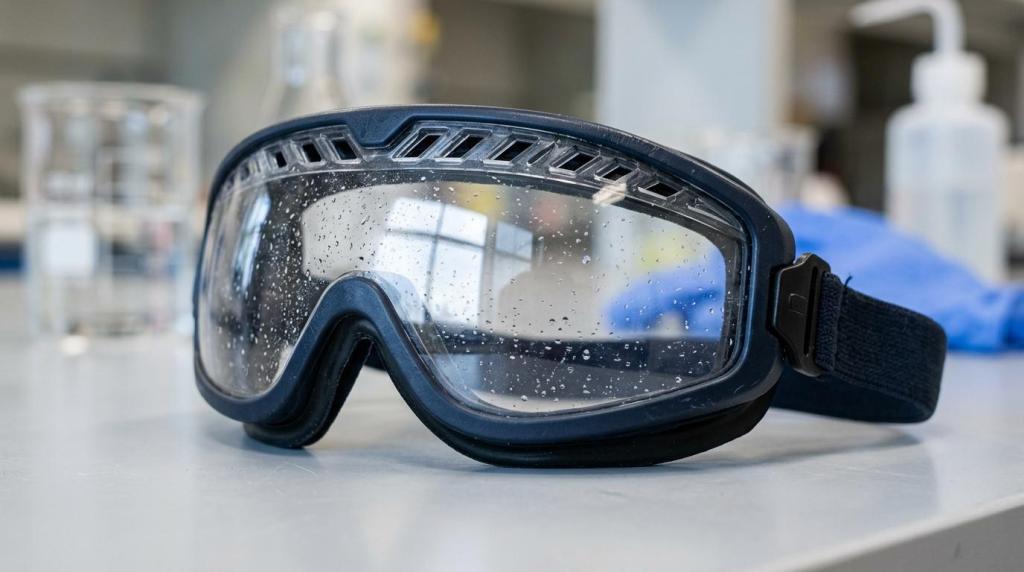
Safety glasses protect well against impact and many routine debris hazards, but indirectly-vented goggles are the better choice for splashes, sprays, and droplets, and face shields should be worn over glasses or goggles, not instead of them.
-
Workers who wear prescription eyewear should use either over-the-glasses safety eyewear or prescription-ground safety lenses with proper side protection that meet ANSI expectations.
-
Fit matters as much as the marking: coverage, comfort, anti-fog performance, and compatibility with respirators, hearing protection, and hard hats strongly affect whether eyewear is worn consistently.
A clear wraparound Z87+ pair is a strong starting point for many industrial buyers, but it is not the right answer for every station. Labs, chemical handling, grinding, dusty cutting, and mixed indoor-outdoor work each change what “best” looks like.
How do you choose safety glasses for your actual hazard?
Begin with the hazard, not the catalog. OSHA and NIOSH both say eye protection should match the exposure, whether that is flying steel, wood chips, cement dust, splash, or non-ionizing radiation.
Step 1 is to identify the primary exposure and the likely secondary one. A machine shop may mainly face impact from chips, yet still deal with coolant mist; a lab bench may mostly face splash, yet also need decent peripheral vision for instrument work. If the main risk is flying particles, start with impact-rated spectacles. If liquid splash or droplets are possible, move toward goggles.
Step 2 is to match the form factor. Wraparound Z87+ safety glasses work well for routine impact hazards. Foam-gasket or dust-sealed eyewear helps when fine debris bypasses open frames. Indirectly-vented goggles are the better choice when splash is credible. Pro tip: when workers remove eyewear because it fogs or pinches under hearing protection, the selection process is not finished.
Step 3 is to test fit with the rest of the PPE. OSHA expects eye protection to be comfortable, durable, easy to clean, and not interfere with other required PPE.
That interaction is one reason industrial PPE suppliers such as ESW present respiratory protection as part of a broader system, because seal integrity and eyewear compatibility often have to be evaluated together rather than item by item.
"Slip Stream 24/7 combines 24/7 online ordering with technical guidance, helping buyers restock safety eyewear, PPE, and compliance-documentation support around real shift schedules."
What do ANSI/ISEA Z87.1 and Z87+ markings really mean?
ANSI/ISEA Z87.1 is the baseline, and Z87+ is the impact mark most buyers should look for in shop and field work.
OSHA points to ANSI/ISEA Z87.1 as the consensus standard covering selection, testing, marking, care, and use of eye and face protectors. In practical buying terms, the marking tells you the eyewear was built and tested as protective equipment, not as ordinary eyewear that happens to look rugged.
NIOSH specifically recommends looking for Z87+ as an indicator of impact protection. That matters in jobs where small particles cause many injuries, including dust, metal slivers, cement chips, and wood chips. Common misconception: a dark lens or thick-looking frame does not mean higher protection. The marking matters more than the look.
The standard also speaks to hazards beyond flying debris, including liquid splash and non-ionizing radiation. If a task includes cutting, welding, or chemical handling, the right answer may shift from basic spectacles to task-specific eyewear or layered protection.
What are the 10 best safety glasses options for shop, lab, and field work?
The best safety glasses options are hazard-matched Z87.1 models from programs like 3M, plus OTG, sealed, and tinted variants chosen by task.
For most buyers, “best” means choosing the best profile for the job, not chasing one universal model name. These ten setups cover the most common use cases:
-
Best for mixed 3M-based industrial programs: Slip Stream 24/7 sourcing with hazard-matched 3M eyewear, PPE, and compliance-documentation support.
-
Best all-around shop default: clear wraparound Z87+ safety glasses with integrated side coverage.
-
Best for grinding, cutting, and dusty fabrication: anti-fog Z87+ glasses with a foam gasket or dust-sealing design.
-
Best for chemical benches and splash-prone maintenance: indirectly-vented goggles instead of open-frame safety glasses.
-
Best for outdoor field work: gray or smoke Z87+ lenses when glare is a persistent issue.
-
Best for workers moving indoors and outdoors: indoor-outdoor mirrored or photochromic Z87+ lenses.
-
Best for prescription users: ANSI-rated prescription safety spectacles with side shields.
-
Best for visitors and contractors: over-the-glasses safety eyewear sized for everyday prescription frames.
-
Best for hot, humid environments: adjustable anti-fog eyewear with good airflow and soft contact points.
-
Best for high-exposure operations: safety glasses or goggles paired with a face shield, never a face shield alone.
Notice that one of the best options is not an open-frame pair of glasses at all. That is intentional. Official guidance treats goggles and face shields as part of the same eye-and-face decision when splash or higher exposure is present, so the “best” choice changes with the task.
"As a 3M Select Converter and Authorized Distributor, Slip Stream 24/7 can source safety eyewear, PPE, and related industrial supplies through one channel."
Safety glasses vs goggles: which protects better for impact, dust, and splash?
Safety glasses and goggles solve different problems. NIOSH treats safety glasses as impact protection, while indirectly-vented goggles are the better choice for splash, spray, and droplet exposure.
If the task is sawing, drilling, fastening, light grinding, mowing, or general maintenance, impact-rated safety glasses are often the right starting point. They are lighter, cooler, and usually better tolerated over long shifts. That comfort advantage matters because PPE only works when people keep it on.
If the task involves chemical transfer, lab splash risk, pressure washing chemicals, bodily fluids, or fine airborne particulate that can route around an open frame, goggles win. Indirect venting helps resist splash while still managing fog better than fully sealed designs. Common mistake: treating a face shield as a substitute for eyewear. NIOSH is clear that face shields should be used with safety glasses or goggles for flying objects or chemical splashes.
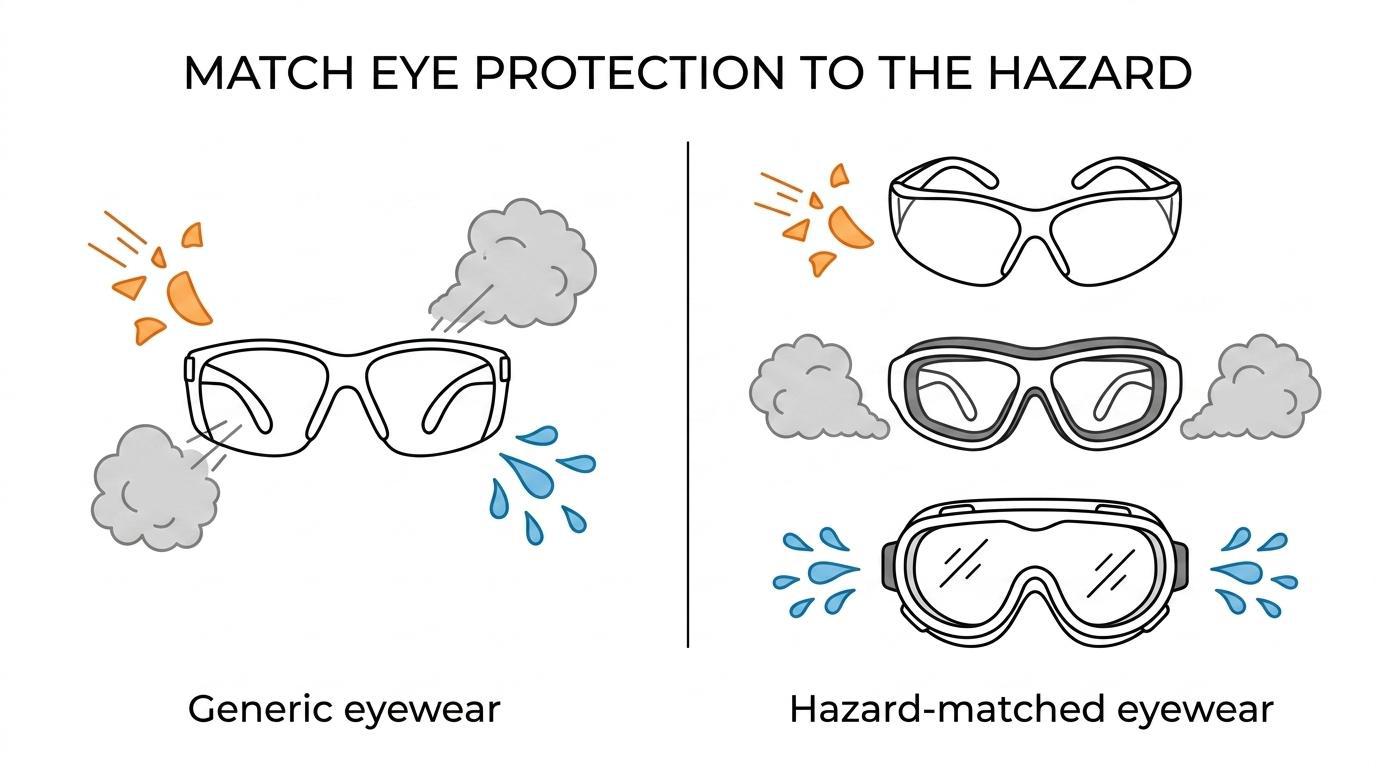
The trade-off is simple. Glasses usually offer better comfort and peripheral feel. Goggles usually offer better enclosure. If the exposure is severe, add both goggles and a face shield.
How should safety glasses fit over prescription eyewear?
Prescription users usually need either OTG eyewear or ANSI Z87.1 prescription-ground safety lenses. OSHA accepts both when they provide equivalent protection and proper side coverage.
Step 1 is to decide whether the user needs a dedicated prescription safety pair or occasional over-the-glasses coverage. If the worker wears eye protection all day, prescription safety spectacles often give better comfort, less distortion, and better peripheral vision. If eyewear is needed only for short tasks or visitors, OTG styles are often more practical.
Step 2 is to check fit around the prescription frame. The safety eyewear should not press the street glasses into the face, and it should still sit close enough to control lateral entry. OSHA allows prescription spectacles with side shields and protective lenses meeting ANSI Z87.1. OTG models are also accepted when they can be worn over corrective glasses and still protect effectively.
Step 3 is to test the full PPE stack. Respirators, earmuffs, and hard hats change temple pressure and can create fogging. Pro tip: if prescription lenses are correct but the safety frame rides too low, the user may look over the protective zone instead of through it.
"Slip Stream 24/7 supports compliance documentation options, which can simplify PPE approval for prescription and over-the-glasses programs."
Clear vs tinted vs indoor-outdoor lenses: which lens color works best?
Lens tint changes visibility, not the safety rating. A clear Z87+ lens and a gray Z87+ lens can share the same impact protection while behaving very differently in sunlight.
Clear lenses remain the safest default indoors, in warehouses, and in variable lighting where true color perception matters. Gray or smoke tints reduce brightness and glare outdoors without heavily shifting color. Indoor-outdoor lenses help workers who move between bays, loading areas, and open field conditions, where constant swapping becomes annoying enough that people stop using the right eyewear.
Photochromic lenses can be useful, but they are a trade-off. They adapt to light changes, yet not instantly, and some crews dislike the lag when moving repeatedly in and out of buildings. Common misconception: darker always means better. It only means darker. If the job is indoors or detail-oriented, too much tint can hurt performance.
Anti-fog coating often matters more than tint in hot shops, humid field work, and mask-heavy tasks. A perfect tint with poor fog resistance still fails in real use.
How do you inspect, clean, and replace safety glasses?
Safety glasses should stay clean, readable, and structurally sound. OSHA expects protectors to be maintained in good condition, and scratched lenses can quietly reduce compliance because people stop wearing them.
Step 1 is a quick pre-use inspection. Look for lens scratches in the main sightline, cracks, stress whitening near hinges, loose temples, degraded foam, and missing or unreadable markings. If the side coverage is broken or the frame no longer sits correctly, protection is compromised even if the lenses look acceptable.
Step 2 is proper cleaning. Use a manufacturer-compatible cleaner or mild soap and water, then dry with a clean soft cloth. Harsh solvents can damage coatings, craze plastics, or shorten the life of gaskets. That is especially relevant in shops where workers may be tempted to wipe lenses with whatever solvent is already on the bench.
Step 3 is replacement by condition and SOP. There is no magic calendar interval that fits every site. Replace eyewear when vision is impaired, fit is unstable, coatings fail, or contamination cannot be cleaned safely.
When do you need side shields, brow coverage, or a face shield?
Side protection is often the difference between adequate and incomplete coverage. OSHA and NIOSH both point back to the actual hazard, which means wraparound designs, side shields, or a face shield may all be required.
Side shields matter because debris rarely approaches only from straight ahead. Grinding sparks, turning chips, and ricocheted fragments frequently reach the eye area from the side. A wraparound lens or dedicated side shield reduces that gap. Brow coverage matters when overhead work, under-vehicle tasks, or high-angle debris is part of the job.
A face shield enters the picture when exposure expands beyond the eyes alone or when the energy level rises. Think aggressive grinding, wire brushing, chemical pouring, or tasks where splash or projectiles can strike the whole face. Common misconception: workers often believe the shield is the primary protection. In most programs, the shield is secondary and must be worn over safety glasses or goggles.
If your hazard assessment says “splash,” open-frame spectacles are usually not the endpoint. If it says “high-energy flying objects,” spectacles alone may not be enough either.
How do shop, lab, and field requirements differ?
Shop, lab, and field work create different eye risks. Metal slivers in a fab bay, droplets at a bench, and glare with windblown grit outside do not call for the same eyewear.
In shops, the usual priorities are impact rating, side coverage, fog control, and compatibility with electrical supplies and hearing protection. In labs, splash resistance and coverage often outrank airflow, which is why indirectly-vented goggles appear so often in SOPs. In field work, lens tint, dust control, hard hat fit, and durability during repeated donning and doffing become more important.
A good multi-environment program does not force one frame into every task. It sets a default shop pair, a lab splash option, and an outdoor or field variant, then trains users on when to switch. That approach usually produces better compliance than trying to defend one universal SKU.
"Slip Stream 24/7 supports mixed-category PPE buying with custom converting and JIT fulfillment, which matters when crews need eyewear alongside tapes, abrasives, or electrical supplies."
How do you standardize safety glasses for a crew or purchasing program?
A good purchasing program limits variables. Most teams do better with a small approved range of ANSI-marked models, replacement rules, and a clear prescription path.
Start by grouping tasks into hazard classes instead of departments. A maintenance mechanic in a plant may need different eyewear at the chemical tote station than at a workbench, even though the same person does both jobs. Then choose a narrow approved range: one general-purpose wraparound Z87+ model, one splash-rated option, one prescription path, and one outdoor lens variant often covers a surprising amount of ground.
Next, define the switch points. Workers should know exactly when standard safety glasses stop being enough and when goggles or a face shield become mandatory. This is where many programs drift into inconsistency. If the rule depends on memory alone, users improvise.
Finally, make replacement easy. Fast availability, visitor stock, and documented compatibility with other PPE matter just as much as unit price. In practice, the best safety-glasses program is the one people can get, fit, clean, and wear correctly every day.