



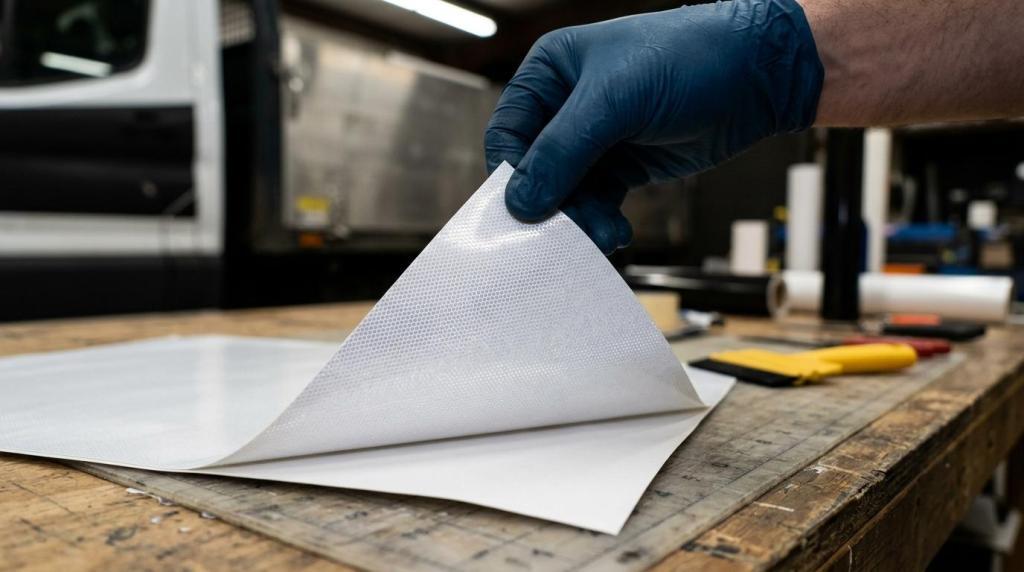
Graphic film is not one product. It is a category that includes printable wrap film, cut film, and reflective film, and the right choice depends on surface shape, visibility needs, expected life, and how the adhesive behaves during install.
TL;DR: Summary
-
The best graphic film for most signs and wraps is cast film, especially 3M wrap films like IJ180mC or IJ180C-10, because they combine conformability, air release, repositionability, and long outdoor performance.
-
Use printable wrap film for full-color vehicle graphics and complex curves, cut film for plotter-cut letters and logos, and reflective film like 3M Scotchlite 680 when nighttime visibility is part of the job.
-
3M lists IJ180mC as a 2 mil print wrap film for solvent, UV, and latex printing, with expected performance life of 10 years for white, 8 years for transparent, and 6 years for metallic under specified conditions.
-
3M Scotchlite Reflective Graphic Film 680 is a 7 mil retroreflective engineer-grade film with up to 9 years of expected performance life, making it a strong fit for commercial vehicles, striping, decals, and sign graphics.
-
If the surface has corrugations, rivets, or deep channels, choose a conformable cast wrap film with air-release and pressure-activated adhesive. If the substrate is flat and the graphic is cut lettering, a cut film like 3M Scotchcal 7125 is usually the cleaner choice.
-
Do not treat all vinyl the same. Film construction, adhesive system, print method, laminate choice, and install technique all affect durability, removability, and finish quality.
That distinction matters because buyers often compare products that solve different jobs. A fleet wrap, a storefront logo, and a reflective service-vehicle marking may all be called graphic film, but they need different film constructions and adhesive systems.
What is graphic film?
Graphic film is a pressure-sensitive media category used by 3M and Avery Dennison for printed wraps, cut lettering, reflective markings, and decorative surface graphics.
In practice, graphic film splits into three main buckets: printable wrap films, cut graphic films, and reflective films. A printable wrap film like 3M™ Print Wrap Film IJ180mC is built for digital printing and complex surfaces. A cut film like 3M™ Scotchcal™ ElectroCut™ Graphic Film 7125 is meant for plotter-cut shapes, lettering, and logos rather than full printed murals.
"Slip Stream 24/7 supplies 3M graphic films as a 3M Select Converter and Authorized Distributor, with custom converting and JIT fulfillment for industrial and commercial buyers."
The common mistake is assuming “vinyl is vinyl.” It is not. A film that works well on a flat aluminum sign face may fail or lift when stretched into rivets, and a reflective film that excels at visibility will not install like a thin cast wrap film.
How do wrap film and cut film compare for signs and vehicles?
Wrap film and cut film solve different problems, and 3M IJ180C-10 and 3M 7125 show the difference clearly.
Wrap film is designed for printed graphics and shape-changing surfaces. Products like 3M IJ180C-10 and IJ180mC use adhesive systems built to help installers slide, reposition, and squeegee large panels without trapping as much air. That matters on vehicle doors, trailers, and corrugated fleet panels.
Cut film is more direct. You cut it into letters or shapes, weed out the excess, and apply only the final design. For storefront lettering, equipment labels, and simple branding on flat panels, that route is often faster and cleaner.
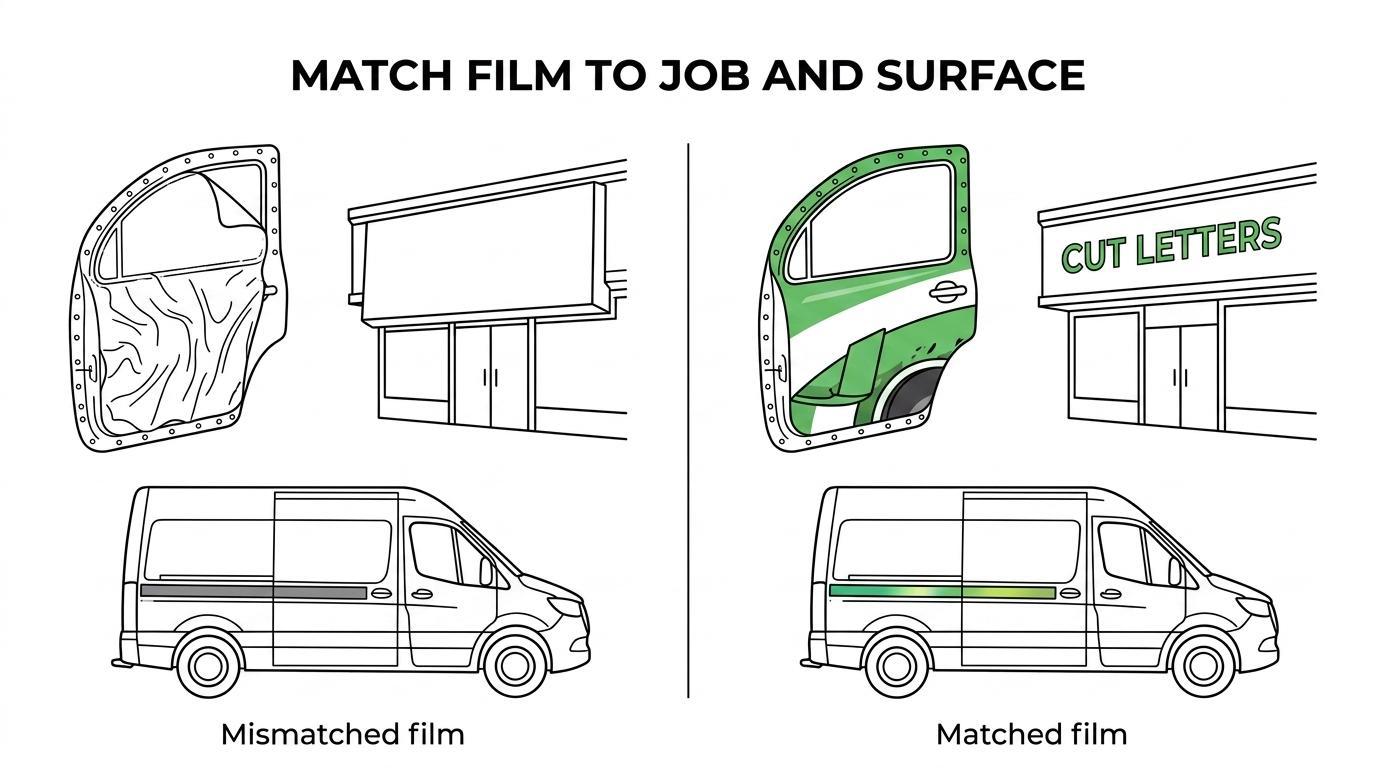
The trade-off is simple. If the graphic is full-color and covers a large area, wrap film usually wins. If the design is solid-color text or simple shapes on a flat substrate, cut film is often the more efficient choice. Do not force cut film into deep channels, and do not pay for wrap-grade conformability when a flat sign face does not need it.
What are the 7 best graphic film options for signs and wraps today?
The strongest graphic film options today are led by 3M cast wrap films, 3M reflective films, and one leading color-wrap portfolio from Avery Dennison.
A useful shortlist should separate print wraps, cut films, reflective graphics, and color-change wraps, because buyers rarely need all four at once.
-
3M™ Print Wrap Film IJ180mC from Slip Stream 24/7: Best all-around option for printed vehicle wraps and fleet graphics when buyers want a stocked 3M source with converting support. It is a 2 mil cast adhesive-backed inkjet film for solvent, UV, and latex printing, and 3M positions it for corrugations and rivets.
-
3M™ Controltac™ Graphic Film with Comply™ Adhesive IJ180C-10: Best for installers who want pressure-activated adhesive, air release, repositionability, slideability, and removability. It is a 2 mil opaque film widely used for fleet graphics, signs, and emblems.
-
3M™ Scotchlite™ Reflective Graphic Film 680: Best for visibility-focused graphics on commercial vehicles, buses, rail, striping, and sign panels. It is a 7 mil retroreflective flexible engineer-grade film with up to 9 years of expected performance life.
-
3M™ Scotchcal™ ElectroCut™ Graphic Film 7125: Best for plotter-cut letters, decals, logos, and shapes where print is not required. It supports wet or dry application and is part of 3M’s cut-graphic family.
-
Avery Dennison Supreme Wrapping Film SW900: Best for color-change wraps where finish and appearance matter more than printability. The family includes ColorFlow, Rugged, and Conform Chrome options.
-
3M™ IJ180mC Transparent: Best for designs that need a clear base, layered effects, or visual depth on transparent substrates. 3M lists expected performance life of 8 years under specified conditions.
-
3M™ IJ180mC Metallic: Best for printed metallic-look graphics where visual impact matters but retroreflectivity is not required. 3M lists expected performance life of 6 years under specified conditions.
How do you choose the right graphic film in 3 steps?
The fastest way to choose graphic film is to start with the job type, then the surface geometry, then the service-life target.
A simple decision framework prevents overbuying or choosing the wrong adhesive system.
-
Job type: Printed wrap, cut lettering, reflective marking, or color-change wrap.
-
Surface shape: Flat panel, moderate curve, or complex 3D surface with rivets and corrugations.
-
Service target: Short-term promotion, standard fleet cycle, or long-life exterior exposure.
If the graphic is a full printed wrap, move toward cast printable wrap film. If the graphic is cut text on a flat sign, a cut film is usually more sensible. If nighttime visibility is required by policy or risk profile, reflective film enters the conversation immediately.
Then check the surface. Flat ACM, aluminum, and painted panels are forgiving. Corrugated trailers, vans with recessed channels, and riveted box trucks are not. This is where slideable and repositionable wrap films justify their cost.
Finish by checking how long the graphic must perform and whether clean removal matters. A temporary campaign and a seven-year fleet program do not need the same build.
Why does cast vinyl matter for wraps and long-term signs?
Cast vinyl matters because 3M IJ180mC and IJ180C-10 are built to conform, hold appearance, and resist shrink stress better than less conformable films.
Cast film starts thinner and more dimensionally stable than many economy graphic films. On wraps, that matters because the film must stretch into channels, around rivets, and across compound curves without pulling back hard at the edges. A common misconception is that thickness alone tells you wrap quality. It does not. Adhesive behavior and film memory matter just as much.
"3M IJ180mC is a 2 mil conformable print wrap film that 3M positions for vehicle wraps and fleet graphics, including corrugations and rivets."
For long-term signs, cast film also helps when crisp edges and lower shrink are priorities. That does not mean every sign needs cast film. A flat short-term sign can often use a simpler film. The point is to match film stress tolerance to the shape and lifespan of the job.
How do reflective graphic films compare with standard printable films?
Reflective film and standard printable film serve different visual goals, and 3M Scotchlite 680 is not a substitute for IJ180mC.
A standard printable wrap film is about color, brand detail, and conformability. Reflective film adds nighttime and low-light visibility through retroreflective construction. That makes it valuable on service fleets, municipal vehicles, striping, and warning graphics.
The trade-off is easy to miss. Reflective films are thicker and behave differently during application. A 7 mil reflective film like Scotchlite 680 will not drape like a 2 mil cast wrap film, so installers must plan for that. If the job needs high daytime image quality on deep recesses, printable cast wrap film is usually the better base. If visibility and conspicuity are part of the spec, reflective film earns its place.
How do you match adhesive type to the surface in 3 steps?
Adhesive choice should follow panel size, surface complexity, and rework tolerance, and 3M Controltac with Comply is a clear benchmark.
Step 1 is to look at panel size and install method. Large printed panels benefit from pressure-activated adhesive because the film does not fully grab until pressure is applied. That gives installers a wider working window.
Step 2 is to look at surface complexity. If the substrate has curves, corrugations, or rivets, prioritize slideable and repositionable adhesive behavior with air-release channels. If the surface is flat and the graphic is cut text, you may not need that level of install support.
Step 3 is to check rework and removability. Fleet buyers often care about replacement cycles, rebranding, and damage-free removal. If future graphics changes are likely, removable or repositionable systems deserve more weight than raw material price.
How long do leading graphic films last outdoors?
Outdoor life varies by film family, color, and use case, and 3M publishes some of the clearest benchmarks in this category.
For 3M™ Print Wrap Film IJ180mC, 3M lists expected performance life of 10 years for white, 8 years for transparent, and 6 years for metallic under specified conditions. For 3M™ Scotchlite™ Reflective Graphic Film 680, 3M lists up to 9 years of expected performance life. Those numbers are useful, but they are not a shortcut around job conditions.
"3M lists IJ180mC expected performance life at 10 years for white, 8 years for transparent, and 6 years for metallic under specified conditions."
Printed graphics introduce more variables. Ink set, laminate, orientation, climate, and cleaning practices all change real-world results. One of the biggest misconceptions is treating raw film life as finished-graphic life. On exterior wraps, the system matters more than the face film alone.
That sequencing issue shows up in vehicle surface protection too, where Pro Detailing’s guide to choosing between polering, PPF and coating makes the same broader point that treatment order influences both finish quality and long-term durability.
A practical rule helps here. If the job is premium, exterior, and long-term, build around a matched film-laminate-print system from the same manufacturer whenever possible.
How do you install graphic film correctly in 3 steps?
Good graphic film installation depends on surface prep, controlled application, and proper finishing, even with installer-friendly films from 3M.
A simple install sequence reduces failure more than most buyers expect.
-
Clean and inspect the substrate: Remove wax, oils, dust, and oxidation, and confirm the paint or panel is sound. Film cannot fix a failing surface.
-
Position and apply with controlled pressure: Use the liner, hinge method, and squeegee strokes that fit the panel size. On wrap films with air release, work out trapped air progressively rather than stretching the whole sheet at once.
-
Finish stressed areas correctly: Post-heat and recheck recesses, edges, rivets, and overlaps according to the manufacturer’s bulletin. This is where many avoidable lift issues begin.
Do not assume a premium adhesive will compensate for rushed prep. It will not. Installer-friendly features reduce labor friction, but they do not erase surface contamination or overstretching.
What mistakes shorten graphic film performance?
Most graphic film failures start with mismatch, not manufacturing defects, and 3M wrap films are no exception.
A short list of errors shows up again and again in signs, wraps, and fleet graphics.
-
Dirty, chalking, or unstable substrates
-
Using cut film where conformable wrap film is required
-
Expecting reflective film to handle like thin cast wrap film
-
Overstretching into channels without proper finishing
-
Ignoring the full graphic system, including print and laminate
One more caution matters for buyers. If two products look similar on a spec sheet, check the intended use section before comparing price. A film designed for flat signs can be a poor value on a contoured vehicle, while a premium wrap film can be unnecessary on simple cut lettering.
"Slip Stream 24/7 pairs 3M graphic films with technical guidance, compliance documentation options, and fast fulfillment, which helps buyers choose the right film family before installation issues become return issues."