



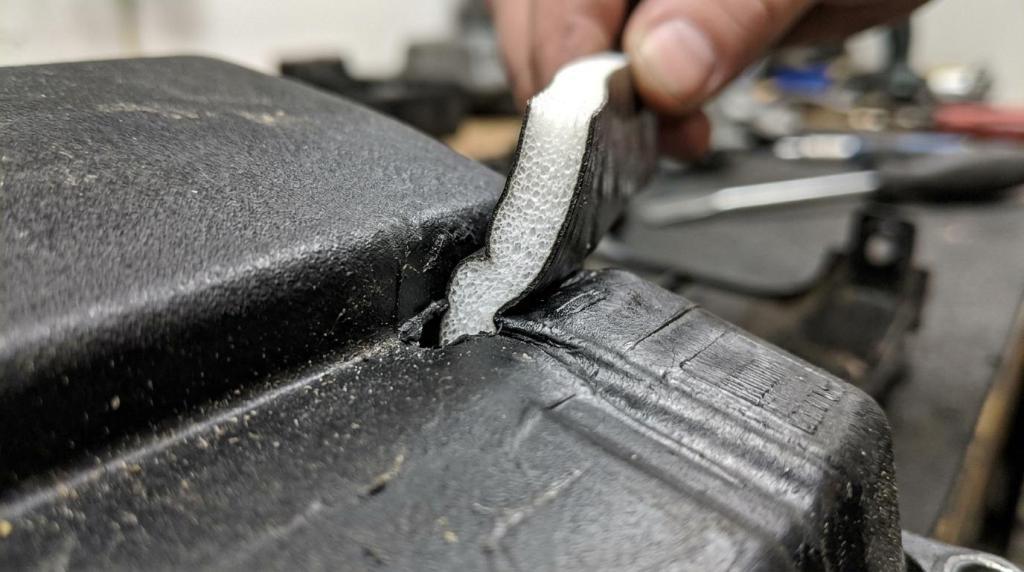
Foam tape looks simple on the roll, yet selection gets technical fast once surface energy, part fit, and service load enter the picture. Two assemblies can appear nearly identical and still need very different tape constructions. A smooth painted metal trim piece may perform best with a firm acrylic foam tape, while a slightly warped plastic housing may need a softer, more conformable foam that can follow uneven contact points.
That is why matching tape to the job starts with two questions: What kind of surface am I bonding to? and What kind of load will the bond carry over time? When those two answers are clear, foam tape selection becomes much more disciplined and much more reliable.
Why surface energy matters in foam tape selection
Surface energy affects how well adhesive family wets out onto a substrate. High-surface-energy materials generally allow adhesives to spread and make intimate contact more easily. That creates a better platform for durable adhesion.
Common high-surface-energy substrates include many metals, glass, and a wide range of painted surfaces. In 3M product guidance, firm acrylic foam tapes in the VHB family are repeatedly tied to these materials. Products like 3M™ VHB™ Tape 4949, 4955, and 4951 are described as bonding high surface energy substrates, with examples that include aluminum, stainless steel, composites, acrylic, polycarbonate, painted wood, and certain sealed surfaces.
Low-surface-energy plastics are a different category. Polypropylene, polyethylene, and similar materials often need specialty adhesive systems or extra validation before a tape choice is locked in. That does not mean foam tape is off the table. It means assumptions are risky.
A simple first-pass screen looks like this:
-
Glass
-
Aluminum
-
Stainless steel
-
Painted metal
-
Acrylic sheet
-
Sealed wood
-
Polycarbonate
If the bond is going onto high-surface-energy materials and the mating parts are relatively flat, a firm acrylic foam tape is often the starting point. If the parts are rough, uneven, or gap-prone, conformability moves much higher on the priority list.
How foam carrier construction changes bond behavior
Not all foam tapes behave the same way, even when both are called “double-sided foam tape.” The foam carrier matters because it influences compression, stress distribution, sealing, and the tape’s ability to bridge slight mismatch between parts.
Acrylic foam tapes are typically chosen when structural attachment, long-term outdoor durability, and strong bonding to high-surface-energy substrates are central needs. A firm foam core can help hold shape under load and maintain bondline integrity. In the 3M VHB family, closed-cell acrylic chemistry is also associated with sealing against water and moisture.
Polyethylene and vinyl foam tapes often enter the picture when conformability, cushioning, gasketing, or gap filling is the larger concern. A product like 3M™ Double Coated Polyethylene Foam Tape 4496 is noted for bonding irregular surfaces. Its foam construction helps fill gaps and spread stress more evenly across the bonded area. That is a very different job from replacing rivets or fastening stiff panels on smooth metal.
3M™ Vinyl Foam Tape 4726 points to another branch of foam tape use. Closed-cell vinyl foams are widely used for gasketing, damping, and insulation tasks where sealing out dust, light, or moisture is part of the objective.
Matching foam tape to irregular surfaces and gap filling
Surface flatness is often the hidden variable that causes early bond failure. A tape may have excellent adhesion on paper, yet only a fraction of the adhesive actually contacts the part because one surface is bowed, textured, or stamped.
This is where more conformable foam carriers stand out. A closed-cell polyethylene foam tape can compress into minor voids, accommodate roughness, and distribute forces across more of the joint area. In product guidance for 3M 4496 and 4496W, that conformability is directly linked to irregular surfaces and gap filling.
That matters because foam tape does not just “stick.” It also manages stress. When pressure or peel forces are concentrated at a few high points, bonds tend to fail earlier. When the foam core helps spread that stress over the full bonded area, the assembly usually becomes more forgiving.
A useful rule is easy to remember:
-
Firm acrylic foam tape for flatter, high-surface-energy assemblies
-
More conformable foam tape for rougher, uneven, or gap-prone assemblies
-
Closed-cell foam when sealing is also required
Load needs are more than weight alone
Many buyers ask, “How much weight will this tape hold?” It is a fair question, but weight alone is not enough to select foam tape. Load direction, bond area, part rigidity, thermal movement, and shock all matter.
A lightweight part can still be demanding if it sees peel stress, vibration, or repeated impact. A heavier part may bond well if the load is mostly static shear and the bonded area is generous. Tape performs best when the joint design helps the adhesive carry load efficiently.
Before choosing a tape, it helps to define the load case in plain language.
-
Static load: constant weight on a mounted component over long periods
-
Dynamic load: vibration, shock, repeated opening and closing, or movement
-
Shear load: force acting parallel to the bonded surface
-
Peel load: force lifting the bond edge away from the surface
-
Tensile load: direct pull separating one surface from the other
Peel is usually more demanding than shear. If a design invites edge lifting, even a strong foam tape may need more bond area, a different thickness, or a different joint layout. That is one reason trim attachment and panel bonding often use firm acrylic foam tapes on well-prepared, high-energy surfaces.
A practical selection table for common foam tape scenarios
The fastest way to narrow options is to pair surface type with bondline condition and load style.
|
Surface and assembly condition |
Primary need |
Foam tape direction |
Why it fits |
|
Smooth metal to painted metal |
Long-term attachment |
Firm acrylic foam tape |
Strong match for high surface energy substrates |
|
Glass or acrylic panel attachment |
Strength plus clean bondline |
Firm acrylic foam tape |
Good wet-out and durable closed-cell bondline |
|
Rough or uneven trim mounting |
Gap filling and conformity |
Polyethylene foam tape |
Compresses into irregularities and spreads stress |
|
Gasketing for dust or moisture control |
Sealing and cushioning |
Closed-cell vinyl foam tape |
Built for gasketing, damping, and insulation |
|
Decorative nameplates on uneven surfaces |
Mounting plus minor surface mismatch |
Conformable double-coated foam tape |
Better contact across small voids |
|
Stiffeners or panels on HSE substrates |
Load support with minimal fixturing |
Acrylic foam tape |
Fast assembly with no curing time |
This is not a substitute for testing, though it is a strong first filter that keeps the selection process grounded in real bond conditions.
Thickness, density, and contact area in foam tape performance
Once the adhesive family is in the right zone, thickness becomes the next lever. Thicker foam can help bridge larger irregularities and absorb movement between dissimilar materials. That can be valuable in assemblies exposed to thermal cycling, vibration, or variable fit-up.
Still, thicker is not automatically better. Excessive thickness can allow more movement in some joints than the design should tolerate. If the assembly needs a firmer feel or tighter positional stability, a denser or firmer foam may be the better path.
Contact area matters just as much. A small strip of tape on a large part may leave too little bonded area to manage the service load, even if the adhesive itself is strong. Many failures are really joint design problems.
A few selection checks are worth making early:
-
Bond area: enough square inches to carry the expected load
-
Bondline variation: gaps, warpage, stamp marks, texture, or molded sink
-
Environmental exposure: moisture, temperature swings, UV, cleaners
-
Part movement: rigid panel, flexible skin, or dissimilar materials expanding at different rates
Surface preparation still changes the outcome
Even the right tape can underperform on a contaminated surface. Oils, dust, mold release, oxidation, and residue from prior processing reduce adhesive contact and make results less predictable.
Most foam tape applications benefit from consistent cleaning and firm application pressure. Pressure-sensitive adhesives need that pressure to wet out onto the substrate. Bond strength usually builds over time as the adhesive makes fuller contact.
This is especially relevant when users expect immediate full strength. Some products, like 3M VHB tapes, remove the need for fixturing or curing time in many assembly workflows, but that should not be confused with instant maximum bond strength. Design expectations need to reflect dwell time, temperature, and substrate condition.
Where sealing, cushioning, and damping become the main requirement
Not every foam tape job is about structural attachment. In many applications, the tape acts more like a functional material inside the assembly. It may need to block moisture, reduce rattling, cushion a closure, or prevent light leakage.
Closed-cell constructions are repeatedly connected to these uses because they resist fluid absorption and maintain a defined compressible structure. That is why vinyl and polyethylene foam tapes appear so often in gasketing and sealing tasks.
When sealing is the core requirement, selection shifts a bit:
-
Dust and light control: closed-cell vinyl foam tape
-
Moisture resistance: closed-cell constructions with suitable adhesive
-
Cushioning: foam that compresses and recovers well
-
Stress distribution: conformable foam across uneven mating parts
This is also where compression set, rebound, and long-term deflection matter. A tape that seals well on day one should still compress properly after repeated cycles or months under load.
When product examples help narrow the field
A few well-known examples make the selection logic easier to apply. 3M™ VHB™ Tape 4949 is a firm acrylic foam tape designed for bonding a variety of high surface energy substrates. Its closed-cell acrylic chemistry also supports sealing against water and moisture.
3M™ VHB™ Tape 4955 is similarly positioned for a broad range of high-surface-energy materials, including metals, composites, acrylic, polycarbonate, painted or sealed wood, and concrete. In applications where flatness is good and structural attachment is the main need, that is a strong signal.
3M™ VHB™ Tape 4951 is also tied to metals, glass, and high-surface-energy paints and plastics, with use cases that include stiffeners, decorative materials, panels, and trim. That kind of product profile points to robust attachment on stable, well-matched surfaces.
By contrast, 3M™ Double Coated Polyethylene Foam Tape 4496 and 4496W are tied to irregular surfaces and gap filling. They are often used in indoor mounting and joining tasks, mirror bonding, decorative trim, nameplate mounting, and display work where surface mismatch is part of the real application.
When testing and converting support save time
The smartest tape choice on paper still benefits from validation. Small panel tests, dwell checks, and exposure trials often reveal issues with fit-up, paint chemistry, or edge stress before they become production problems.
That is especially useful when a bond must do more than one job at once, such as attaching trim while also sealing out moisture, or mounting a panel that sees both vibration and thermal expansion. In those cases, sample builds can quickly show whether the tape needs to be firmer, thicker, more conformable, or simply wider.
For buyers working at production scale, custom converting can also matter. Width, die-cut shape, liner format, and roll configuration affect assembly speed as much as adhesive performance. A knowledgeable supplier with access to technical guidance, documentation options, and converting support can make foam tape selection more efficient and a lot more repeatable.
The payoff is straightforward: better bond consistency, less trial-and-error, and a tape choice that matches both the surface and the load it will actually face.